
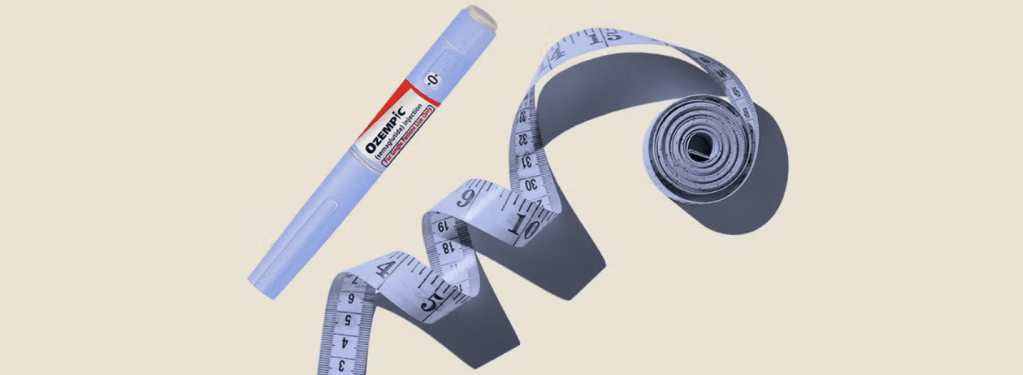
In 2017, Ozempic was approved for the treatment of type 2 diabetes. In 2025, social media has equated the drug with easy weight loss. This unintended use could have dire consequences for non-diabetics using the drug and diabetics who need access to the drug.
Jesse Plemons, Oprah Winfrey, Rebel Wilson, Adele, Tracy Morgan, Kelly Clarkson, Melissa McCarthy, and more celebrities were known for their talents in singing and acting, but their names were also associated with their bigger bodies.
Hollywood has not been a historically kind place for bigger celebrities, especially women.
Many of these celebrities have spoken about the unrealistic and restrictive body standards that Hollywood upholds.
In 2015, Mindy Kaling told The Guardian, “If I call myself a cute, chubby girl, the natural kind woman’s response is, ‘You’re not chubby! You’re beautiful! And thin!’ I always want to hug the person and say, ‘It’s OK, I identify as someone who is cute and chubby.’”
In 2017, Kelly Clarkson told Redbook that people think there’s something wrong with her when she puts on weight.
In 2012, Adele told People, “I’ve never wanted to look like models on the cover of magazines. I represent the majority of women and I’m very proud of that.”
Different body types grow in popularity over time, reflecting each decade’s social perceptions and dietary trends. When the 2020s rolled around, the trend seemed to be “lose as much weight as possible”.
Those stars who formerly spoke out against unrealistic body standards were conforming to them. Their extreme weight loss coincided with the rise of Ozempic, a drug for adults with Type 2 diabetes with a side effect of dramatic weight loss.
In 2015, Amy Schumer tweeted, “I am a size 6 and have no plans of changing.” Ten years later, she told Howard Stern that she lost 30 lbs on Ozempic. “I looked great,” she said.
Stars like Schumer have visibly lost weight, inciting commentary and criticism on social media. Celebrity body changes and social media hype have influenced the general population, and Ozempic has now become the most in-demand diabetes drug in the United States.

Ozempic’s framing as a weight loss drug can be accredited to Hollywood and social media, but its off-label use as such has extreme consequences that are not often discussed.
But first, what is Ozempic?
Ozempic, Semaglutide, GLP-1s, Oh My!
Ozempic is the brand name for the anti-diabetic medication, Semaglutide. Semaglutide is a weekly injection of a glucagon-like-peptide-1 (GLP-1) receptor agonist. The drug mimics the body’s production of the GLP-1 hormone, which is naturally released when food is eaten to slow gastric emptying and control the feeling of fullness.
Essentially, drugs like Ozempic make users feel like they’ve just eaten, reducing their appetite and food intake. The drug also increases insulin release, once again mimicking the body’s response to eating food.
Ozempic was approved by the Food and Drug Administration (FDA) in 2017 for treating adults with type 2 diabetes. In 2020, it was approved for another use: reducing the risk of major cardiovascular events, like a heart attack or stroke, in type 2 diabetics. In 2025, the FDA approved the drug for a third use: reducing the risk of worsening kidney disease in adults with type 2 diabetes or chronic kidney disease.
Yet, FDA approval was not the spark that caused Ozempic’s prescription and usage rate to surge – especially as a weight loss drug. That spark was the approval of another brand of Semaglutide.
Wegovy was approved by the FDA in 2021 for weight management in overweight or obese adults. Despite having the same active ingredient, Ozempic and Wegovy are not interchangeable and are regulated at different doses.
Both start at 0.25 mg a week, with users increasing the dose gradually every few weeks. Wegovy has users go up to 2.4 mg weekly, while Ozempic’s maximum dosage is 2 mg a week.
Wegovy’s popularity as a weight loss drug grew after its approval, creating supply shortage issues for the drug. That’s when people turned to Ozempic for the same effect, creating competition with diabetics who need the drug.
The Implications of Ozempic Use
For type 2 diabetes patients, Ozempic has proven to be extremely effective in mitigating the disease and its symptoms. But it isn’t without adverse side effects.
Ozempic’s side effects include nausea, vomiting, hypoglycemia, ketoacidosis, gallbladder disease and more. Those side effects are why Schumer stopped taking Ozempic, despite losing weight.
“I was bedridden. I was vomiting — you have no energy,” she told Howard Stern. “I was one of those people that felt so sick (I) couldn’t play with my son.”
In addition, according to research at the University of Alberta, almost 40% of the weight you lose with Ozempic is muscle mass. A 2022 study (graph on the left) showed that when patients stopped using Ozempic, they regained the weight they had lost, meaning users need to take the medicine for life to have consistent long-term weight loss.

And research is still ongoing. Ozempic is a new drug, and its long-term effects are still relatively unknown – especially when using it off-label.
The increase in off-label use, facilitated by social media framing and popular culture, created a three-year Ozempic and Wegovy supply shortage from 2022 to 2025. The shortages profoundly affected diabetic patients, leaving them without the medication that regulates their blood sugar. This can lead to adverse health complications like nerve damage, kidney disease and cardiovascular issues.
The risks for diabetics enabled by this shortage pushed the FDA to allow compounded versions of Semaglutide to enter the market.
The compounded version of Ozempic has Semaglutide as an ingredient but may not include other ingredients found in Ozempic. These compounded medications are not approved or tested under FDA standards, leading to adverse side effects and possible health risks.
For people with type 2 diabetes, the shortage has created a lose-lose situation. They either take a medication that is unsafe or take no medication at all, and the consequences can be dire.
Ozempic and Social Media
Social media has played a major role in the reframing of Ozempic as a weight loss drug, despite it not being approved for that use.
As Ozempic became highly popular on TikTok in early 2023, Google searches for Ozempic and weight loss also spiked. Over the past five years, Google searches on Ozempic have increased by a staggering 436%.
These videos have reach. 100 TikTok videos on Ozempic attracted nearly 70 million views, according to an article by News Medical.
Non-professionals post the majority of videos about Ozempic on TikTok and speak about their personal experience with the drug.
A 2023 study found that, of 100 TikTok videos about Ozempic, more than half said they used the drug for, or mentioned, weight loss. One-third of videos with the #Ozempic included language that encouraged people to try Ozempic and painted the drug in a positive light. Most of this language depicts Ozempic as a “miracle” and “magic” drug for weight loss.
This popularity on TikTok coincides with the increase in prescriptions filled, with people asking for Ozempic from their doctors because they heard about it online.
A study done in 2024 found a prominent focus on off-label use of Ozempic for weight loss on Reddit. The discussion board format allowed for more conversational discourse around Ozempic, with people asking for advice and sharing their experiences with the drug.
The study found that a majority of people who spoke from a personal perspective said they prioritized weight loss as their primary goal when using GLP-1 RAs.
However, Ozempic’s approval as a type 2 diabetes treatment is going unmentioned, as well as the adverse consequences of its use.
The Broader Social Commentary of Ozempic
The increased discourse surrounding Ozempic’s impact on Hollywood and social media has only reaffirmed the dangerous body standard ideals society has pushed for decades.
Over the years, thinness has become equated with health, encouraging methods of extreme weight loss, eating disorders and plastic surgery.
Body standards disproportionately affect young women, and Ozempic’s wide reach on social media has followed that trend.
A national study from Michigan Medicine has found that adolescents – especially young women – are increasingly using GLP-1 RAs. The study discovered that 76.4% of young adults dispensed a GLP-1 RA in 2023 were female, with data starting at just 12 years old.
As young women become more susceptible to weight and body standards, Ozempic has continued pushing unhealthy weight loss ideals.
Despite a recent movement for body positivity – spearheaded by celebrities like Lizzo, Ashley Graham and Tess Holliday – smaller bodies have continued to be the everpresent ideal. Without sufficient information surrounding the dangers of extreme weight loss through Ozempic, people will continue to risk their health to fit that ideal.As Cortez Pagan of The Science Survey writes, “As we move forward, instead of focusing on what body is currently trending, we should expand access to life-saving treatments and cultivate a culture that values health, authenticity, and the beauty of human diversity.”
 Julia Boboc
Leave a comment